LSTF Lifeguard Certification Grading System
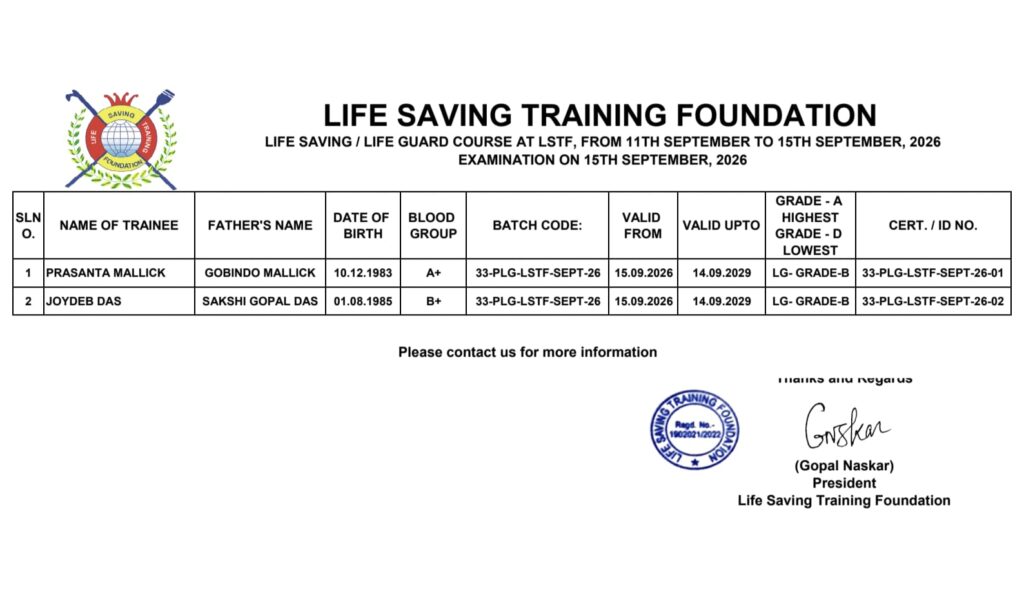
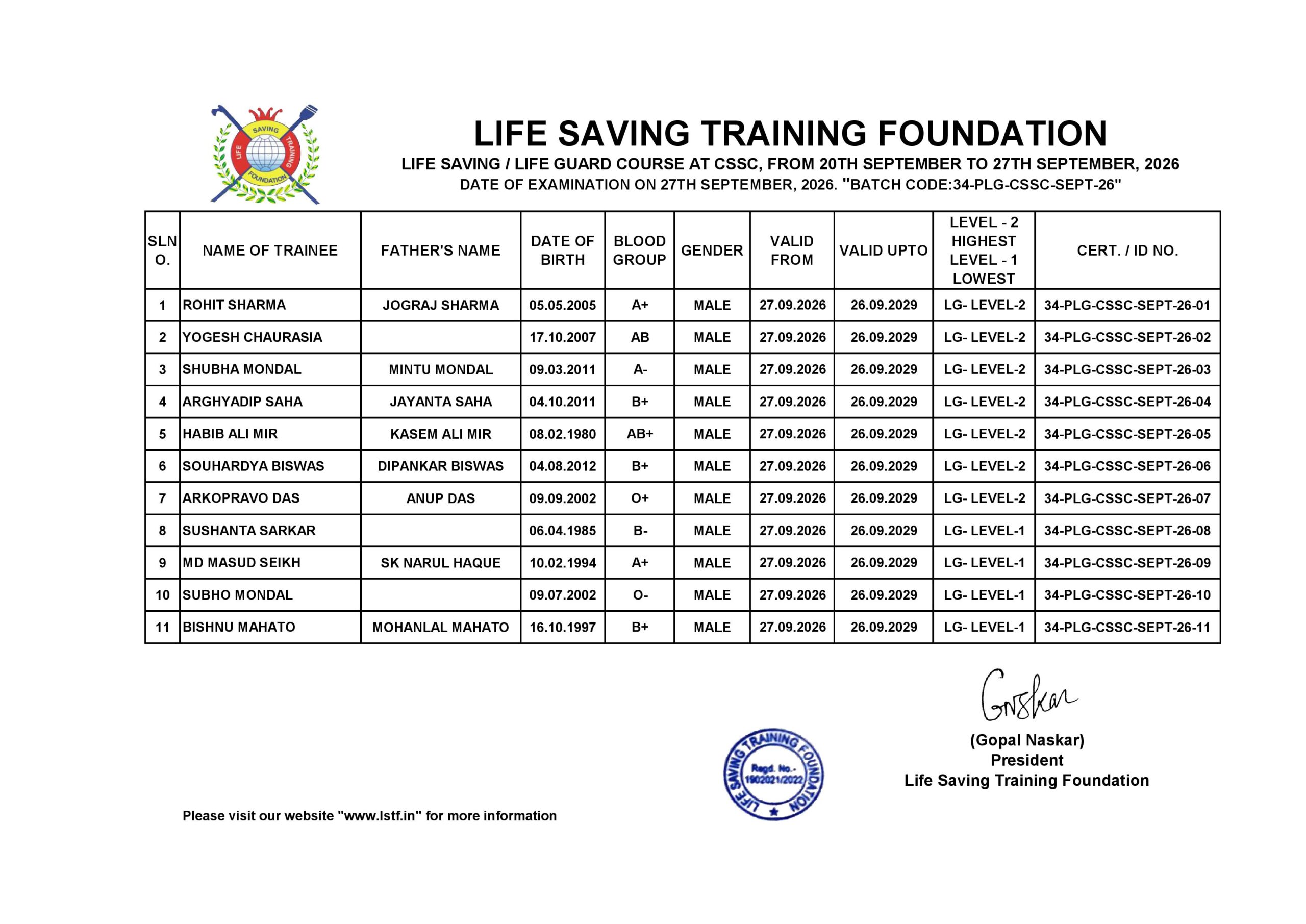
Identifying a skilled lifeguard solely based on a certificate can be quite confusing; however, examining the certification level or grading system can give you an idea of the lifeguard’s level of competence. This is discussed in detail below.
♦Lifesaver Level 1: The ‘Lifesaver Level 1’ training covers the fundamentals of water safety and techniques for rescuing a drowning person from land—without entering the water. The training includes First-Aid, Cardio Pulmonary Resuscitation (CPR), and the use of an Automated External Defibrillator (AED).
♦Lifesaver Level 2: The ‘Lifesaver Level 2’ training enables participants to conduct assistance and rescue operations in shallow water bodies or swimming pools where the maximum water depth does not exceed 1.5 meters. The training covers topics such as First-Aid, Cardio Pulmonary Resuscitation (CPR), and the use of an Automated External Defibrillator (AED).
♦Lifeguard Level 1: It allows the lifeguard to supervise and work in the shallow water or pool area. Lifeguards will focus on water safety measures, and rescue operations—including First-Aid, Cardio Pulmonary Resuscitation (CPR), and the use of Automated External Defibrillator (AED).
♦Lifeguard Level 2: A “Lifeguard Level 2” is more skilled and experienced than a “Lifeguard Level 1”. It allows the lifeguard to supervise and work in deeper areas of a swimming facility. Lifeguards will focus on water safety measures, and rescue operations—including First-Aid, Cardio Pulmonary Resuscitation (CPR), and the use of Automated External Defibrillator (AED).
♦Level 1 Instructor: A ‘Level 1 Lifeguard Instructor’ is a certified professional qualified to supervise and conduct lifeguard training programs.
♦Level 2 Instructor: A ‘Level 2 Lifeguard Instructor’ is a certified and qualified professional who is a highly skilled and experienced master trainer in the field of lifeguard training programs.